
Serotonin-norepinephrine reuptake inhibitors (SNRIs) are commonly used for depression, anxiety disorders, neuropathic pain, and other conditions. While both venlafaxine and duloxetine inhibit the reuptake of serotonin and norepinephrine, their effects on blood pressure are not identical. In this article, we will compare the blood pressure effects of venlafaxine versus duloxetine. The primary mechanism behind SNRI-induced hypertension is increased norepinephrine activity. Norepinephrine stimulates alpha- and beta-adrenergic receptors, which can increase vascular tone, heart rate, and ultimately blood pressure.
As norepinephrine reuptake inhibition becomes more pronounced, the likelihood of blood pressure elevation increases. This is particularly relevant with venlafaxine, where norepinephrine effects become substantially stronger as the dose increases.
Duloxetine and Blood Pressure
Clinical trials have consistently demonstrated that duloxetine has relatively low effects on blood pressure. Here’s an article to support that notion.
From a clinical perspective, most patients receiving duloxetine will experience little to no meaningful change in blood pressure. However, on rare occasions, patients may experience hypertension, particularly those with pre-existing cardiovascular disease or hypertension. It is something that I watch for as dosages escalate but not something that is a major red flag for use. It is rare for a patient to have to stop duloxetine for elevated blood pressure.
Venlafaxine and Blood Pressure
Venlafaxine has a much stronger association with blood pressure elevation. One reason is that venlafaxine behaves primarily as a serotonin reuptake inhibitor at lower doses, but norepinephrine reuptake inhibition becomes increasingly prominent as doses escalate. Clinical trial data (source) demonstrated a clear dose-response relationship:
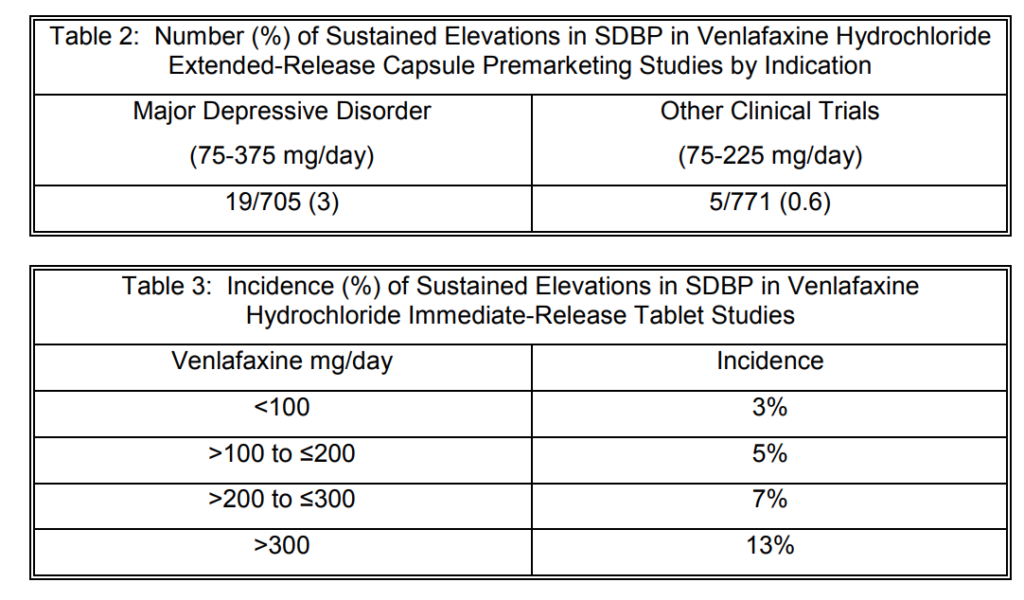
These findings led to warnings in prescribing information regarding dose-related increases in blood pressure and the need for periodic monitoring. Also note that the likelihood of elevated blood pressure is greater with the immediate-release tablet (excellent board exam nugget). Convenience, along with a lower incidence of hypertension, is why you typically see extended-release venlafaxine being preferred in practice. I’m much more aware of blood pressure when I see higher dosages of venlafaxine being utilized compared to the use of duloxetine.
Clinical Pearls for Pharmacists
When evaluating elevated blood pressure in a patient receiving an SNRI, venlafaxine versus duloxetine should generally be considered the more likely culprit to raise blood pressure.
Situations where duloxetine may be preferred include:
• Patients with uncontrolled hypertension
• Patients with cardiovascular disease
• Patients with a history of hypertensive urgency
• Patients who experienced blood pressure elevations with venlafaxine
On the other hand, if a patient has stable blood pressure and venlafaxine is providing excellent symptom control, routine monitoring may be sufficient without requiring a change in therapy.


0 Comments