
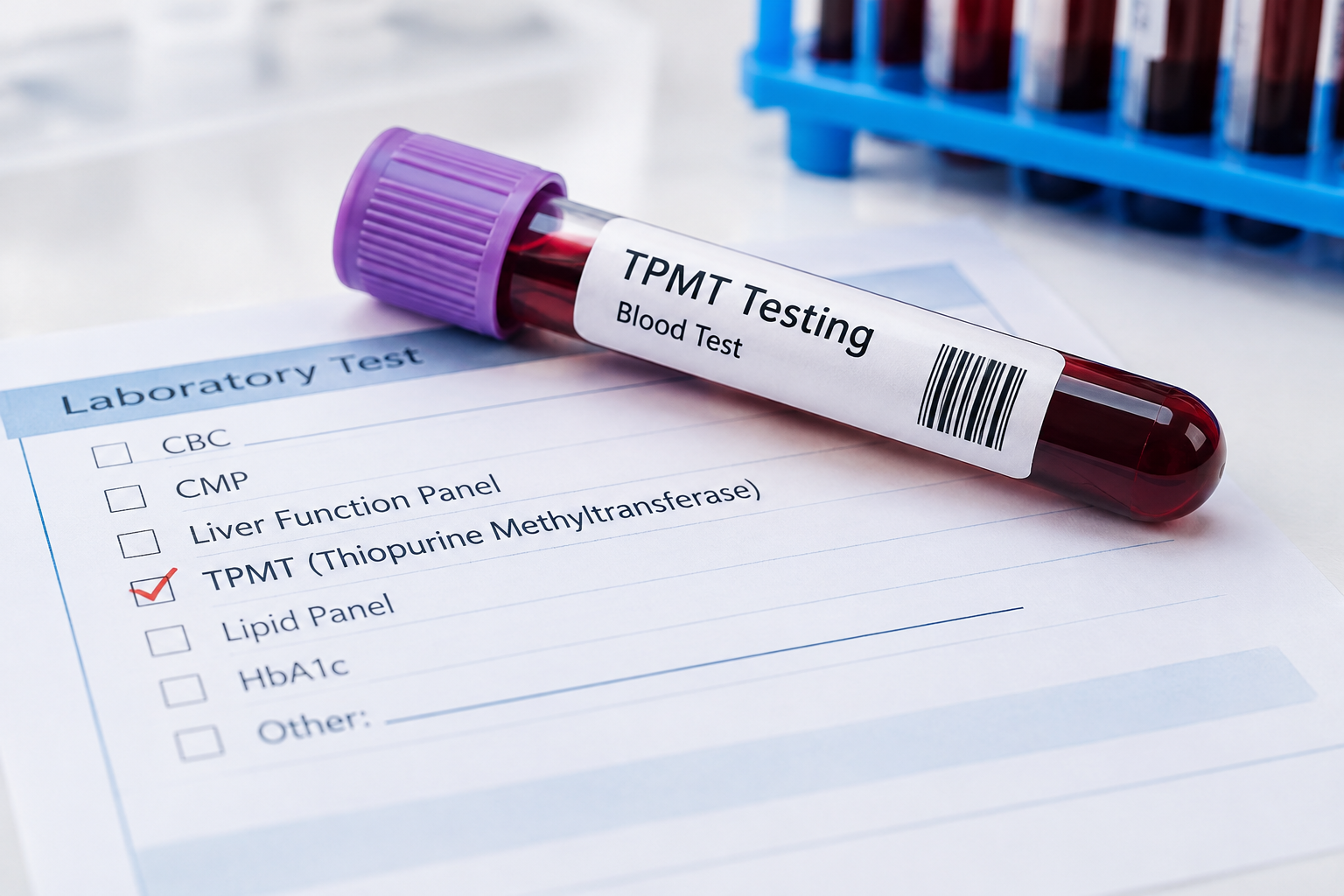
Azathioprine (podcast) is an immunosuppressant used to treat inflammatory bowel disease, rheumatoid arthritis, lupus, and prevent organ rejection after transplantation. One important safety concern is bone marrow suppression, which can lead to serious infections and bleeding. In my practice, I don’t see this medication used very often, but it is important to remember TPMT testing and why it is done prior to starting this medication.
What Is TPMT Testing?
Thiopurine methyltransferase (TPMT) is an enzyme that metabolizes azathioprine. Some patients have genetic variations that result in reduced or absent TPMT activity, increasing their risk of severe medication toxicity. TPMT testing can involve a blood test measuring enzyme activity or genetic testing to identify relevant variants.
Why Is TPMT Testing Important?
Patients with low TPMT activity are at increased risk of severe myelosuppression, including leukopenia, neutropenia, and thrombocytopenia (excellent board exam nugget). Patients with intermediate activity may require reduced starting doses, while those with absent activity generally need an alternative treatment. In most patients who have low or absent TPMT, most clinicians will avoid the use of azathioprine. Recall that TPMT testing is also recommended for 6-mercaptopurine. I have seen less of this medication in practice than azathioprine.


0 Comments