by Eric Christianson | Jun 18, 2023 | Neurology, Pain, and Musculoskeletal Medication and Disease State Clinical Pearls
NSAIDs are a commonly used class of analgesic medication. There are numerous factors that may determine which one we choose. We’ll lay out some of the most important differences between these agents and summarize this information in our NSAID comparison table at...
by Eric Christianson | Mar 26, 2023 | Neurology, Pain, and Musculoskeletal Medication and Disease State Clinical Pearls
I don’t recall learning about oxycodone pharmacokinetics in school. Cut me some slack, maybe I was gone that day? Or maybe my memory is fading? It’s actually pretty complicated and drug interactions and pharmacogenomics can play a significant role in how a...
by Eric Christianson | Jan 18, 2023 | Neurology, Pain, and Musculoskeletal Medication and Disease State Clinical Pearls
In this article, we break down the most important ketamine clinical pearls. Ketamine (ketamine hydrochloride) is FDA approved for general anesthesia in diagnostic and surgical procedures that do not require skeletal muscle relaxation. It has been used on its own or as...
by Eric Christianson | Jan 1, 2023 | Neurology, Pain, and Musculoskeletal Medication and Disease State Clinical Pearls
Opioids are commonly used in clinical practice. Selection on these agents can often be confusion. We’ve outlined some of the most important pharmacokinetic, pharmacogenomic, and dosage form clinical pearls in the table below. For easier reading, we have also...
by Eric Christianson | Dec 25, 2022 | Neurology, Pain, and Musculoskeletal Medication and Disease State Clinical Pearls
Sjogren’s Syndrome is not very common but I do see this diagnosis in practice periodically. This disease has two major symptoms that pharmacists should pay EXTREMELY close attention to. Placing a focus on medications that exacerbate Sjogren’s Syndrome is a...
by Eric Christianson | Oct 19, 2022 | Neurology, Pain, and Musculoskeletal Medication and Disease State Clinical Pearls
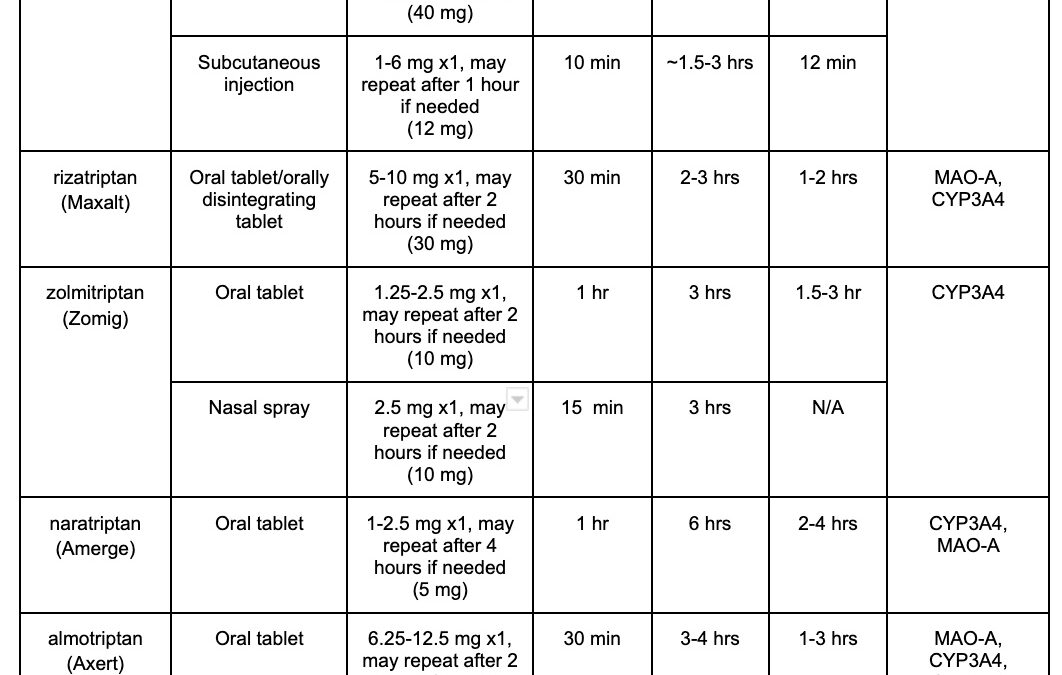
Acute migraine affects up to 26% of women, and up to 9% of men in the US. It is characterized by a moderate to severe headache that lasts for 4-72 hours and may be unilateral, cause nausea/vomiting, pulsating pain, or photophobia. First-line treatment options include...