by Eric Christianson | Aug 12, 2015 | Cardiovascular Case Studies, Educational Case Studies For Pharmacists
ACE Inhibitors are a notorious cause of angioedema. Angioedema is a very serious condition where the lip and upper airway can swell up. It is extremely rare when you consider how many people take ACE Inhibitors. When I think of angioedema happening in practice, I...
by Eric Christianson | Aug 5, 2015 | Educational Case Studies For Pharmacists
An 89 year old male has a history of hypertension, diabetes, BPH, Advanced dementia, glaucoma, constipation, neuropathy, and osteoarthritis. Current medications include: Aspirin 81 mg daily Lopressor 25 mg twice daily Metformin 500 mg twice daily Tamsulosin 0.8 mg...
by Eric Christianson | Jul 26, 2015 | Educational Case Studies For Pharmacists, Psychiatry and Addiction Medicine Case Studies, Renal, Urology, and Electrolytes Case Studies
Citalopram is a very commonly used antidepressant and is part of the Selective Serotonin Reuptake Inhibitor (SSRI) class. SSRI’s do have the potential to contribute to SIADH (basically a reduction in sodium levels in the body). The case: A 68 year old female...
by Eric Christianson | Jul 8, 2015 | Educational Case Studies For Pharmacists
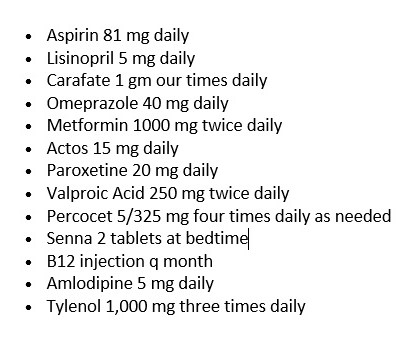
A 67 year old female is on the following medications: Aspirin 81 mg daily Lisinopril 5 mg daily Carafate 1 gm four times daily Omeprazole 40 mg daily Metformin 1000 mg twice daily Actos 15 mg daily Paroxetine 20 mg daily Valproic acid 250 mg twice daily Percocet 5/325...
by Eric Christianson | Jul 1, 2015 | Cardiovascular Case Studies, Educational Case Studies For Pharmacists
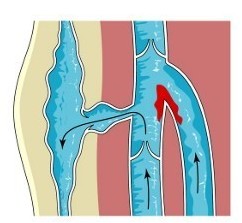
A 93 year old female was diagnosed with a new onset DVT. Her past medical history includes hypertension, hyperlipidemia, osteoarthritis, osteoporosis, constipation, GERD, erosive esophagitis, peptic ulcer disease, and hypothyroidism. Her current medication list...
by Eric Christianson | Jun 24, 2015 | Educational Case Studies For Pharmacists, Neurology, Pain, and Musculoskeletal Case Studies
Pain management is often very challenging. Patients differ from one another. One medication may totally take away the pain for one patient, while that same medication might not even touch the next patient’s pain. The type of pain is obviously an important...